
Oregon Public Records Law in Marion County
Oregon's Public Records Law sits in ORS 192.311 to 192.478. It gives every person a right to inspect nonexempt public records held by a public body. That covers Marion County offices and the Sheriff. ORS 192.314 sets the right to inspect, and ORS 192.324 lets agencies charge fees that reasonably cover their actual cost. The statute page is shown below.
You can read the Oregon Public Records Law for the full framework.
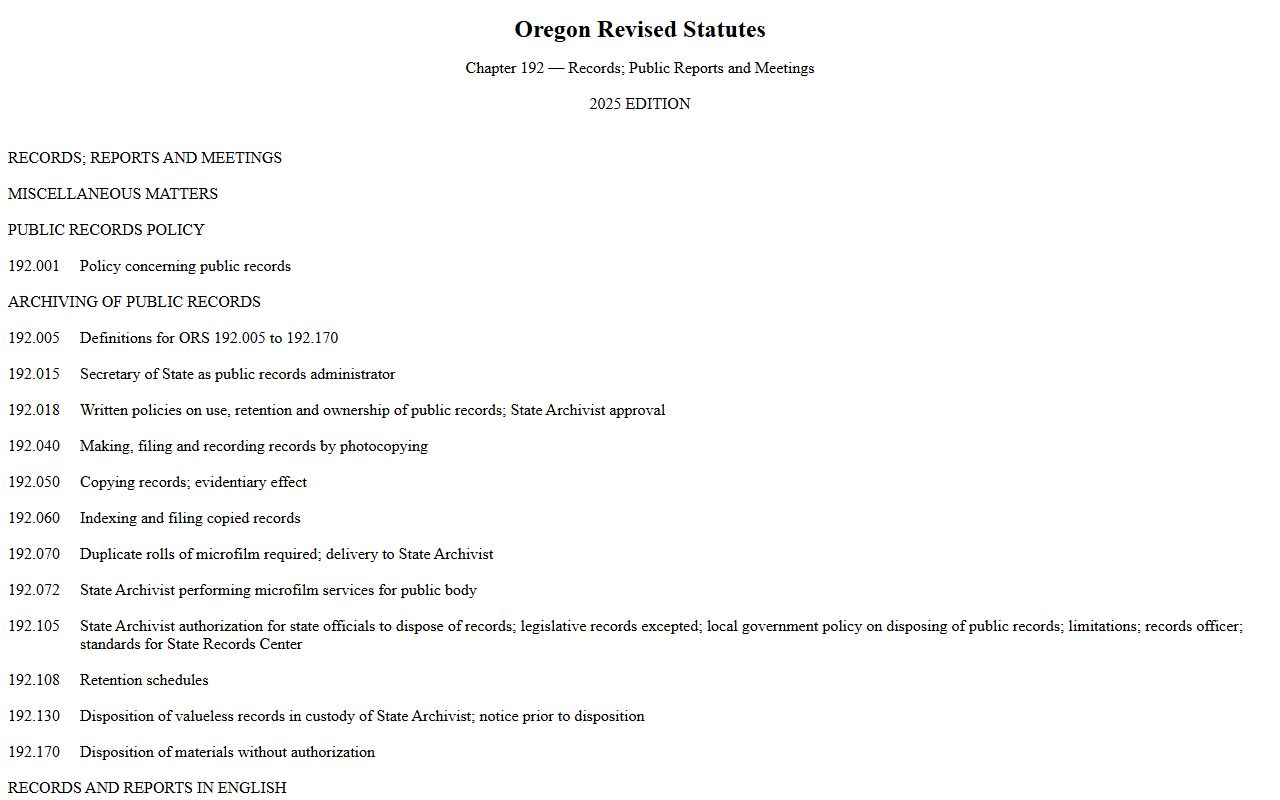
Court case records are different. They fall under ORS Chapter 7 and judicial rules, not the general public records law.
Almost anyone can ask. The right to inspect Marion County public records does not depend on being a resident or stating a reason. You simply ask the office that holds the record. The office must then release it unless a specific exemption applies.
Court Records vs County Agency Records
This split trips up a lot of requesters. A court case file is a judicial record. You search it through the Oregon Judicial Department, not a public records request. A county agency record, like a deed or an election file, is covered by the Public Records Law. So the route depends on the record.
For court case files, see Marion County court records. For recorded documents and marriage records, use the Marion County Clerk. This page focuses on the open-records side: county and agency records.
What the Marion County Clerk Maintains
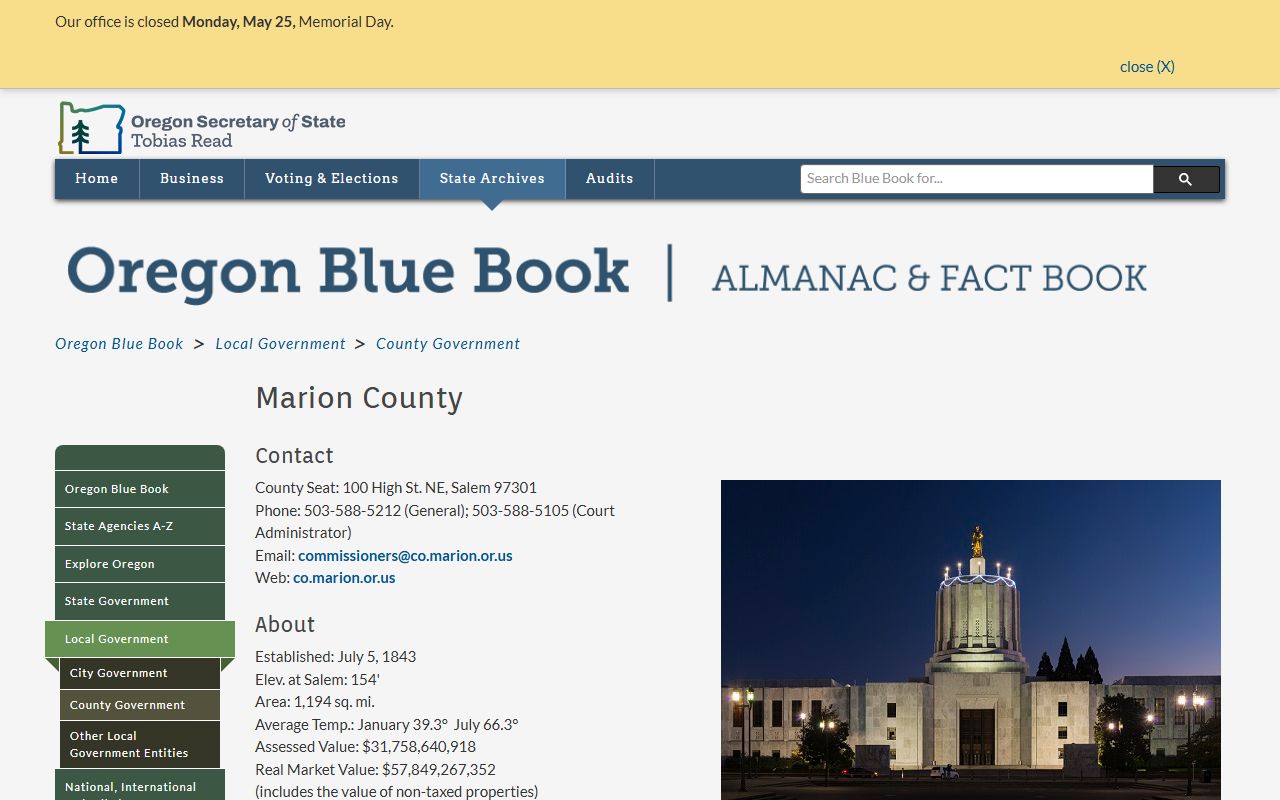
The Marion County Clerk keeps a wide set of county records. The office handles recording, elections, licensing, and records management. The Oregon Blue Book lists the county's officials and offices, shown below.
The Oregon Blue Book Marion County page lists county officials and offices.
- Recorded documents such as deeds, mortgages, and liens.
- Marriage licenses and domestic partnership records.
- Elections and voter records.
- Property value appeals and records management.
- Licensing and recording, including passport acceptance by appointment.
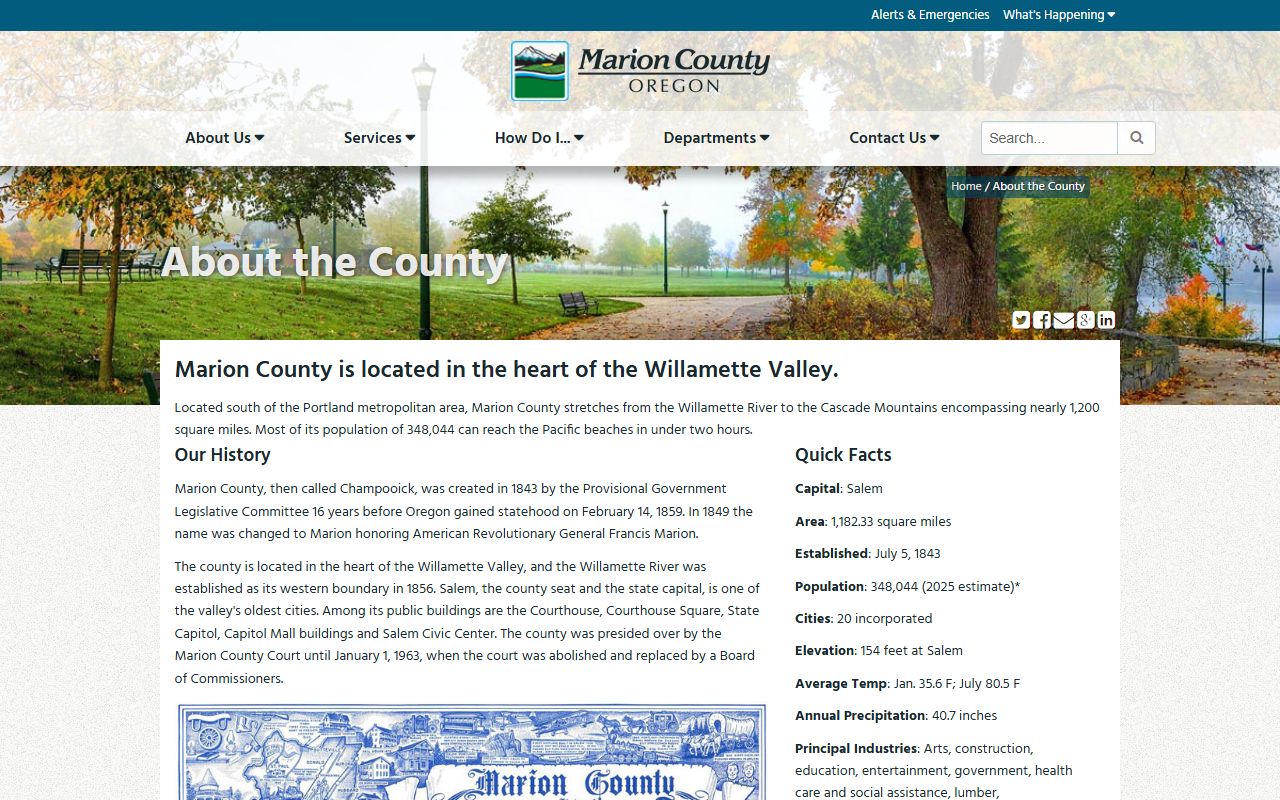
The county's own overview page, shown below, describes its structure and services.
The Marion County about page outlines the county and its offices.
Sheriff records, district attorney records, and other agency files also fall under the open-records law.
How to File a Public Records Request in Marion County
A public records request is a written ask to a specific office. Send it to the office that holds the record, not a central desk. The clearer your description, the faster the response. Follow these steps.
- Identify the right office, such as the clerk, sheriff, or district attorney.
- Describe the records you want as specifically as you can.
- Submit the request by mail, email, or an online form.
- Wait for the office to acknowledge and respond.
- Pay any fees, then receive the records you can lawfully get.
A narrow request costs less and comes back faster than a broad one. If you only need one document, say so.
Public Records Request Fields
Most offices accept a simple written request or a short form. Include the details below so staff can find the record and reach you.
| Field | Required | Notes |
|---|---|---|
| Requester Name | Yes | Who is asking for the records. |
| Contact Information | Yes | Email, phone, or mailing address for the reply. |
| Description of Records | Yes | Be specific; name the type and the office if known. |
| Date Range | No | Narrows the search and lowers the cost. |
| Format Preference | No | Paper, electronic, or certified copy. |
| Fee Waiver Request | No | Ask if disclosure serves the public interest. |
Response Timelines
Oregon law sets response duties. Under ORS 192.329, a public body must acknowledge a request promptly and respond within the law's timelines. The office may ask for more details or a fee deposit before it does the work. Court copy requests run on their own schedule, often up to 5 business days and longer for large requests.
Keep your contact details current. If an office asks for more information or payment and you do not respond, the request can be closed.
Public Records Fees in Marion County
Fees cover the office's actual cost under ORS 192.324. Copy charges are set, while staff time is billed at actual cost. A fee waiver or reduction may apply when disclosure mostly benefits the public.
| Item | Amount |
|---|---|
| Photocopy per page | $0.25 |
| Certification of a record | $3.75 |
| Records search fee | $3.75 |
| Staff research / time | Actual cost under ORS 192.324 |
| Fee waiver | Possible when disclosure serves the public |
Ask for a cost estimate before a large request, so a high bill does not surprise you.
Records That Are Exempt in Marion County
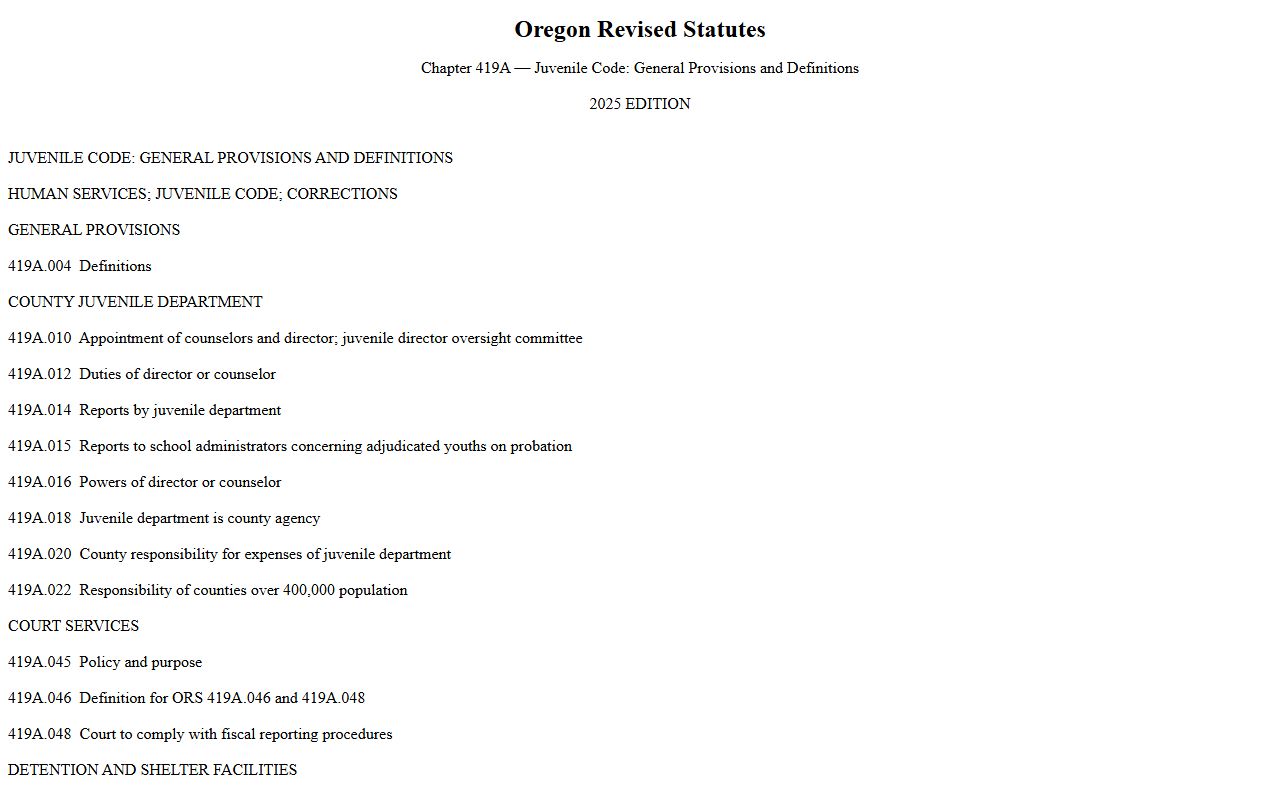
Not every record is public. ORS 192.355 lists many exemptions, including some investigatory, personal privacy, security, and trade secret records. Other statutes shield specific records. Juvenile court records are confidential under ORS Chapter 419A, shown below.
ORS Chapter 419A keeps juvenile records confidential and sets expunction rules.
Some records run the other way and are disclosed by law. The sex offender website disclosure statute is shown below.
ORS Chapter 163A directs public website disclosure of certain sex offender information.
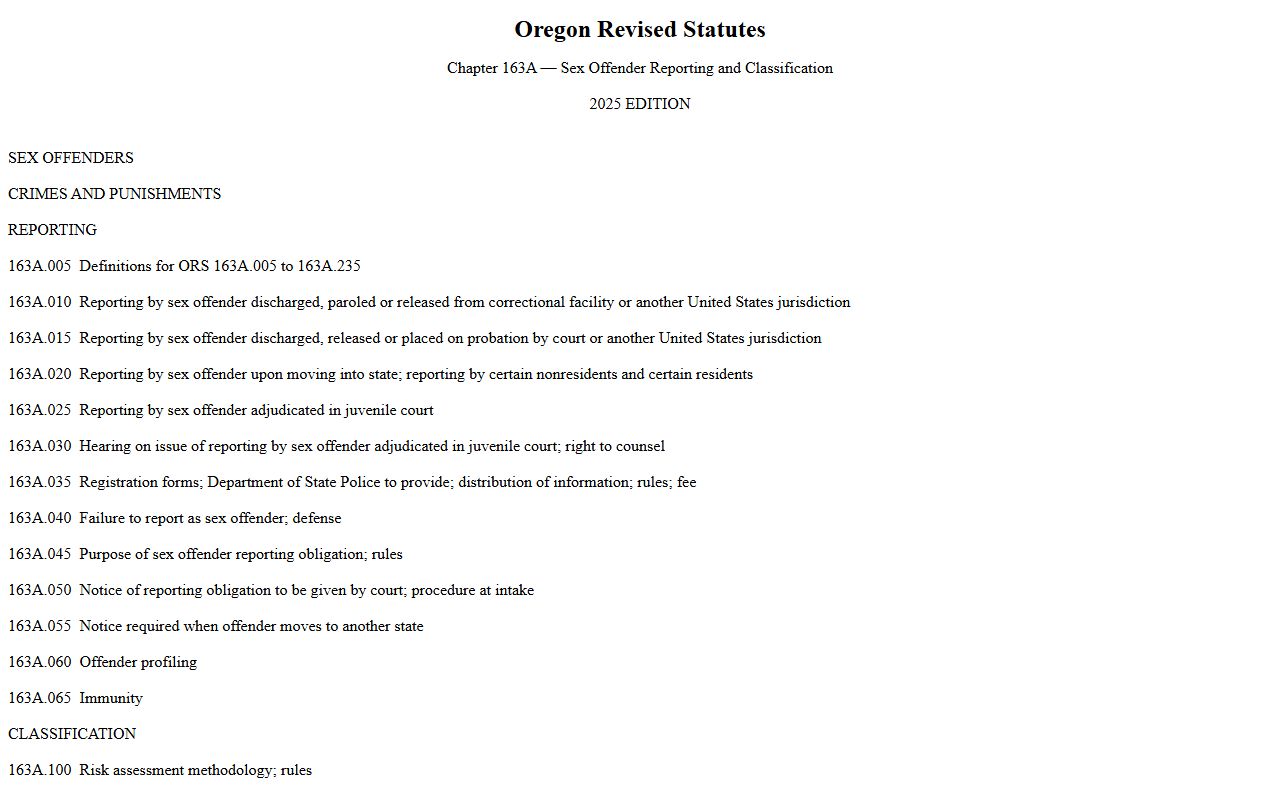
So the open-records line moves both ways, with some files closed and others published.
If Your Marion County Request Is Denied
A denial is not always the end. Under Oregon public records law, you can challenge a denial. For a local body like Marion County, the usual route is a petition to the district attorney to review the denial. State agency denials go to the Attorney General. From there, a requester can take the matter to circuit court. Ask the office for the specific reason it cited, since that guides your next step.
Sheriff and District Attorney Records in Marion County
The county clerk is not the only office that holds Marion County public records. The Sheriff's Office keeps law-enforcement records, jail data, and civil process files. The District Attorney's Office keeps prosecution records and runs units for victim assistance, support enforcement, and expungements. Both follow the open-records law, with the usual exemptions for active investigations.
Where you send a Marion County request depends on which office made the record. A booking question goes to the Sheriff. A prosecution question goes to the District Attorney. A recorded deed or marriage record goes to the county clerk. Sending a request to the right Marion County office is the single biggest time-saver in the whole process.